






At the 74th annual meeting of the American Society of Tropical Medicine and Hygiene (ASTMH), United to Beat Malaria co-hosted a symposium with SC Johnson highlighting the development and impact of spatial repellent technology.
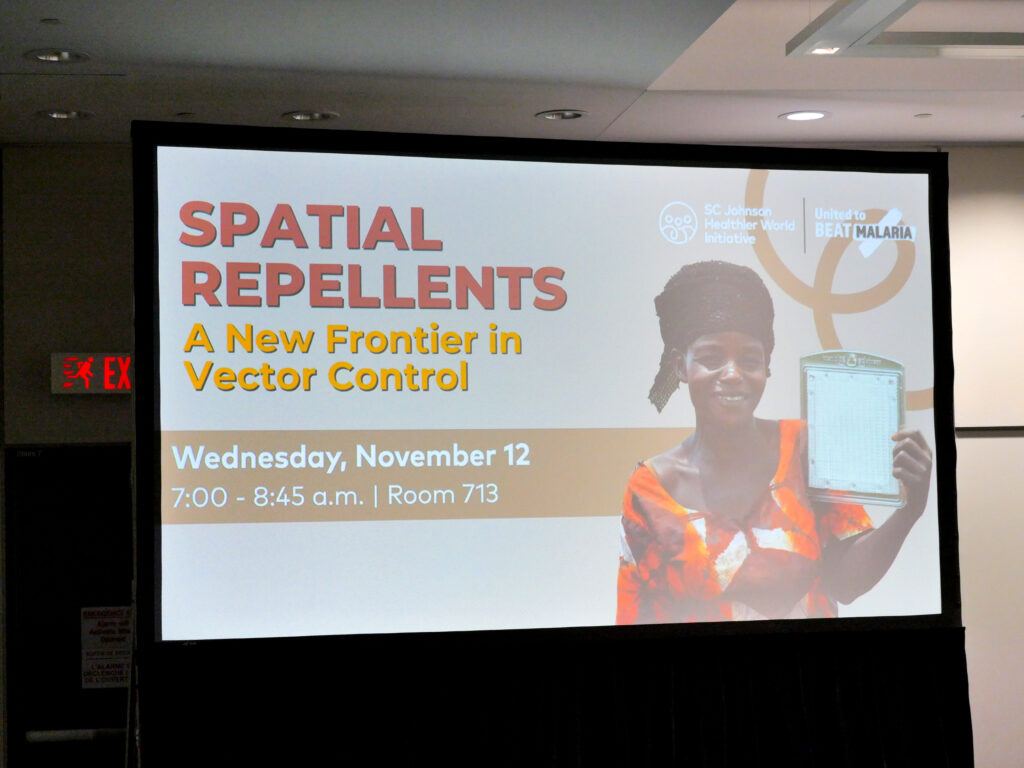
In August, the World Health Organization (WHO) issued a policy recommendation for spatial emanators—the first new category of vector control tools to be approved in more than a decade. In addition, WHO gave prequalification listings for SC Johnson Guardian™ and SC Johnson Mosquito Shield™ spatial repellents as recommended insect-borne disease prevention tools that are ready to be procured. The conditional policy recommendation was the culmination of years of research and field testing to prove these tools’ efficacy.
At the ASTMH symposium, Dr. Daniel Ngamije, Director of Malaria and Neglected Tropical Diseases for WHO, shared that spatial emanators’ efficacy against night and day biters in addition to their portability and ease of use, could make them an important part of the malaria-fighting toolbox. He stressed the importance of adhering to coverage guidelines to ensure efficacy and outlined future opportunities to evaluate their cost-effectiveness and their effectiveness as a stand-alone tool.
Dr. Corine Ngufor, Lead Scientist for the Centre de Recherche Entomologique de Cotonou, Benin (CREC)/ London School of Hygiene and Tropical Medicine (LSHTM) Collaborative Research Programme, presented data from experimental hut evaluations and household randomized trials in Benin. She shared that SC Johnson Guardian™ and SC Johnson Mosquito Shield™ significantly reduced mosquito landing (38-48%), provided personal protection against mosquito feeding, (42-64%) and induced mosquito mortality (20-22%). Further, Mosquito Shield remained efficacious through its 32-day life span and Guardian maintained its entomological efficacy for 12 months. Dr. Ngufor concluded that both show potential to improve control of malaria transmitted by high pyrethroid-resistant vectors in Benin.
Similarly, Dr. Richard Allen, OBE, Chair of The MENTOR Initiative, shared results from MENTOR’s testing of spatial repellants against a range of disease-carrying insects including malaria-carrying Anopheles mosquitos in Nigeria, leishmaniasis-carrying sandflies in Syria, and dengue-carrying Aedes mosquitoes in Yemen. In each case, spatial repellants significantly “knocked out” the disease vectors and improved health outcomes.
“I’ll admit that I was initially skeptical about spatial repellents. But [SC Johnson] listened to feedback and improved the tool over time…Most countries are dealing not just with malaria but several vector-borne diseases so we need to have tools that can address multiple vector-borne diseases.” — Dr. Richard Allen, OBE, Chair of the Mentor Initiative
Given the research findings and now armed with the WHO policy recommendation, spatial repellants are seeing an increase in uptake and are starting to be incorporated by some national malaria programs.
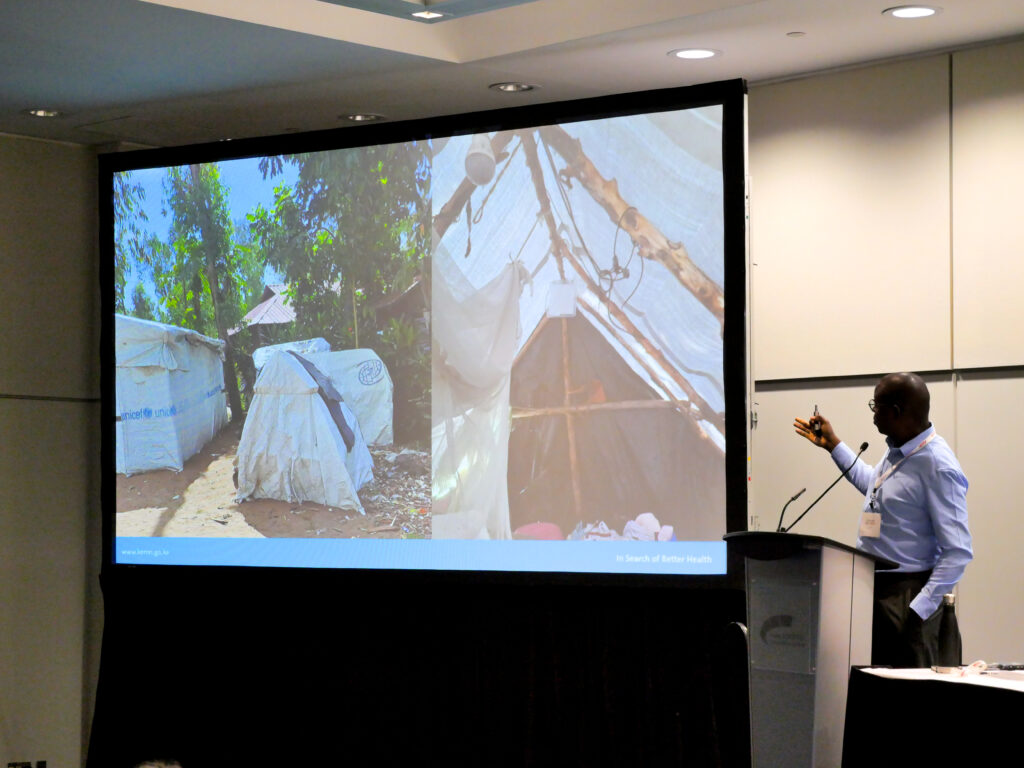
Dr. Eric Ochomo, from the Kenya Medical Research Institute, shared that the Ministry of Health in Kenya has developed guidelines on the use of spatial repellants, including their utility in providing quick, effective, easy-to-use protection for people forcibly displaced by climate and humanitarian emergencies. He showed pictures of SC Johnson Guardian™ and SC Johnson Mosquito Shield™ being deployed in schools, tents and communities in flood-impacted Budalangi in northern Kenya. Kenya is also one of the countries where they are being manufactured.

According to SC Johnson, most of the people who work at their manufacturing facility in Nairobi have personally experienced malaria and have a lot of pride working there and contributing every day to the fight against malaria.
Okefu Oyale Okoko (Philip), Director and Project Manager, IMPACT/LLF Project, Nigeria’s National Malaria Elimination Programme, shared how Nigeria has made significant progress against malaria—from 47% prevalence to 22%—yet acknowledged that much work remains. He shared that given diversity of country and funding constraints, Nigeria has shifted from a one size fits all approach to subnational tailoring that helps determine the best tools and strategies specific to a setting. They’re in process of updating their National Malaria Strategic Plan (NMSP) and are committed to an integrated approach to malaria control including nets, IRS, and LSM and are interested in learning more about the efficacy and cost-effectiveness of SRs to determine appropriate use cases in Nigeria.
While new technologies like spatial repellants are making new progress against malaria and other vector-borne diseases possible, they are emerging into an increasingly challenging and resource-constrained global health landscape. Private actors like the Gates Foundation are increasingly stepping up to invest in proven innovations, David Malone, Senior Program Officer for Malaria with the Gates Foundation, shared that as part of their REACH program, spatial repellents will be deployed and implemented alongside Azithromycin in Mali and Niger. But country programs also need financing support from the multilateral system.
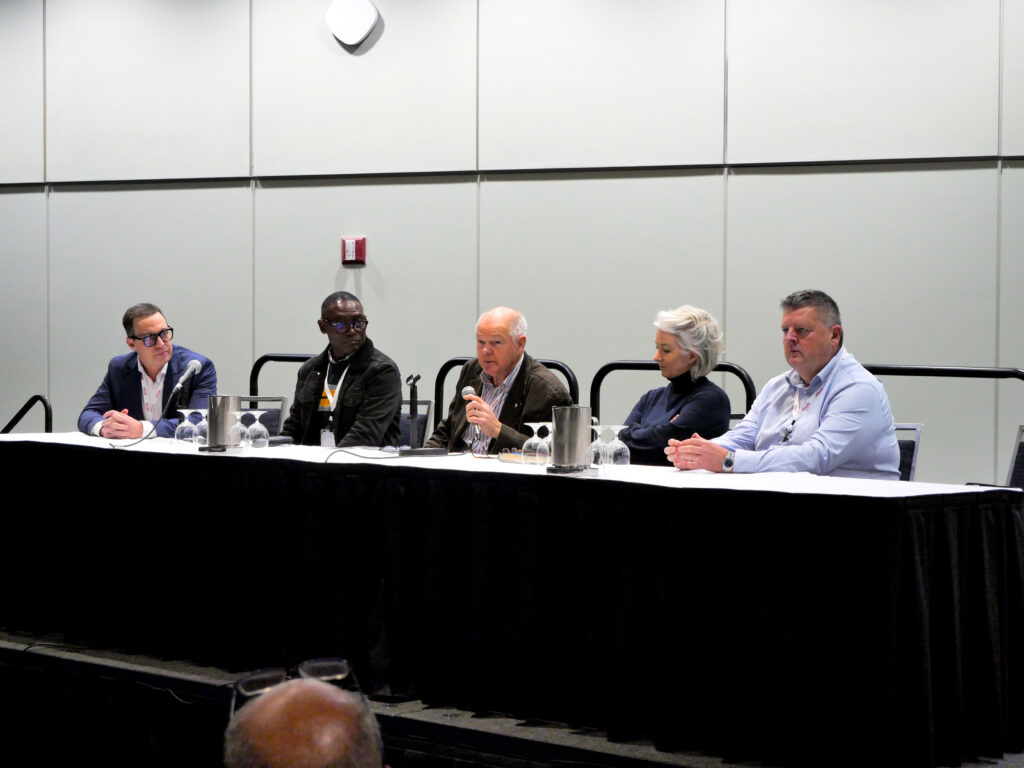
Dr. Kate Kolaczinski, acting head of the malaria team at the Global Fund to Fight AIDS, Tuberculosis and Malaria, noted that cuts to global health funding have been forcing difficult choices. In this context, the Global Fund’s role pooling demand for anti-malaria tools and working with countries to co-finance purchases will have a critical role in ensuring innovations—from spatial repellants to vaccines to seasonal chemoprevention—can be procured and deployed where they are most needed.
While funding uncertainty remains a challenge, science and innovation continue to create new tools to transform the fight against malaria. Increasingly, winning this fight is less a question of whether we have the right tools and more a question of finding the political will to invest in deploying them.
© United to Beat Malaria. 2026 • Save Lives, Beat Malaria
A campaign of the