






On the sidelines of the 80th UN General Assembly, The Future of the Malaria Fight rallied leaders in the global malaria community to work together to forge a new path during a time of uncertainty.
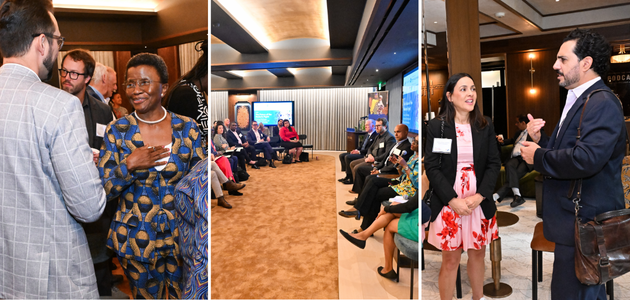
Under the common themes of integration and collaboration, speakers explored the emerging strategies, innovations, and partnerships needed to achieve malaria control and elimination. The scale of the achievement of the last two decades of the fight against malaria has been genuinely immense.
“The latest results of the Global Fund—70 million lives saved and the 63% reduction in mortality for HIV, TB, and malaria — really is a result of the entire partnership,” said Marijke Wijnroks, Head, Strategic Investment and Impact Division at The Global Fund to Fight AIDS, Tuberculosis and Malaria.
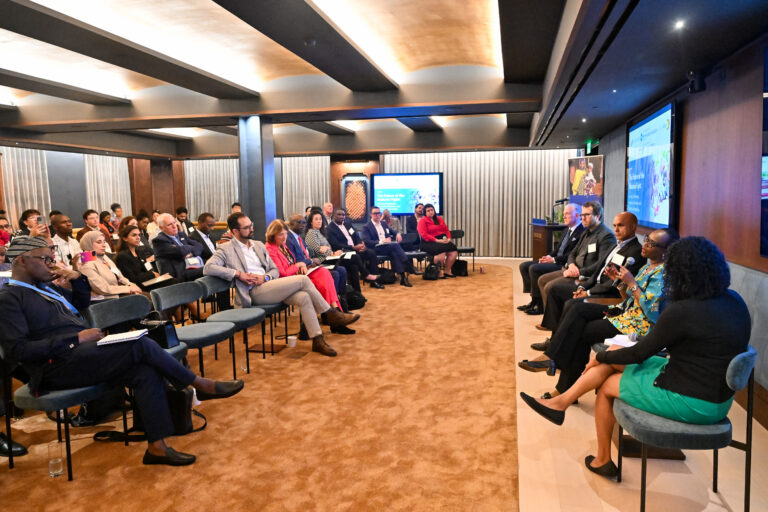
“The work that is being done saves millions of lives every single year,” said Philip Welkhoff, Malaria Director at the Gates Foundation. “But there are many ways to lose that progress. Right now, every malaria case is diagnosed and treated, and we need that to stay the case.”
Despite this enormous progress, new challenges are emerging.
Climate change is expanding the range of mosquitoes that carry the malaria parasite. Mosquitoes themselves are increasingly developing resistance to the insecticides that have made much of this century’s progress possible. The malaria parasite is also becoming increasingly resistant to the drugs we rely on to treat infections.
“We believe that it is important for the entire community to collaborate and accelerate the fight against malaria,” said Joy Phumaphi, Executive Secretary of the African Leaders Malaria Alliance.
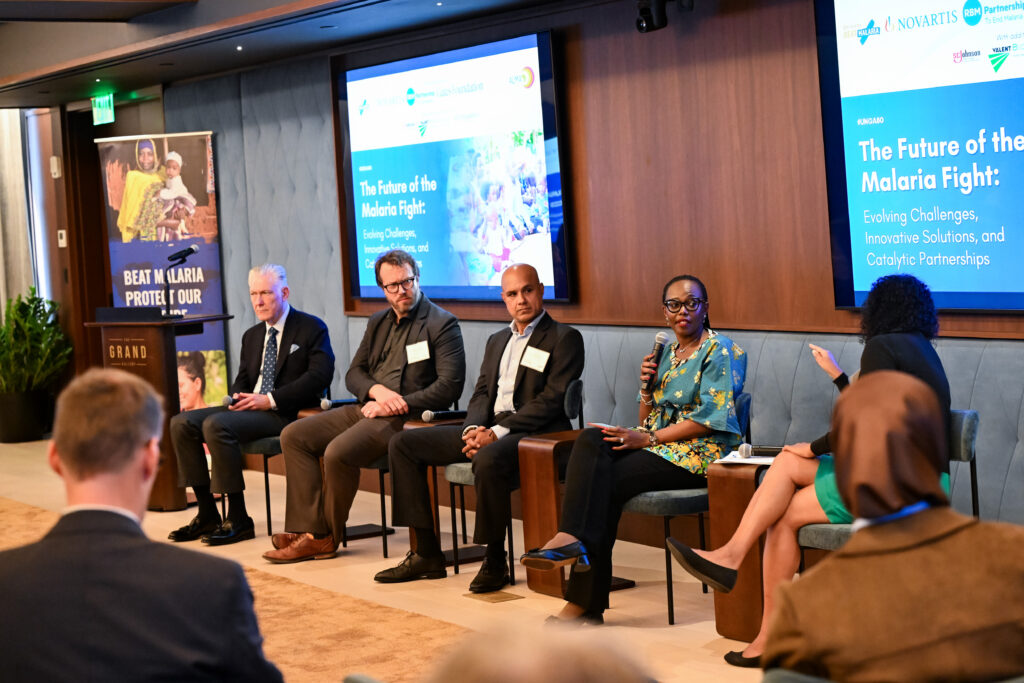
From dual active insecticide-treated bed nets to stronger global-local coordination to mosquito control, our panels of experts identified that while these tools and strategies — among plenty of other crucial methods — are necessary to prevent, treat, and ultimately defeat malaria, they are more powerful when used together.
“There are innovations that countries are trying to scale up,” said Corine Karema, Afrika Kwanza Health Impact Founder and CEO. “More than 50% of countries, for instance, have scaled up insecticide– treated nets, and countries are implementing some strategies such as the use of first-line therapies.”
“The biology and behavior of mosquitoes have been changing for some time now, but it’s just beginning to hit the wire — for example with day biters and invasive species,” said Jason Clark, Valent Biosciences’ Global Managing Director of the Health Division. “We must integrate outdoor mosquito management across the mosquito’s entire life cycle.”
“There’s a reason for hope,” said Dr. Abdou Salam Gueye, Regional Emergency Director of the World Health Organization’s Regional Office for Africa. “To fight malaria and drug and insecticide resistance, every solution will need a combination of partnership, innovation, and intervention.”
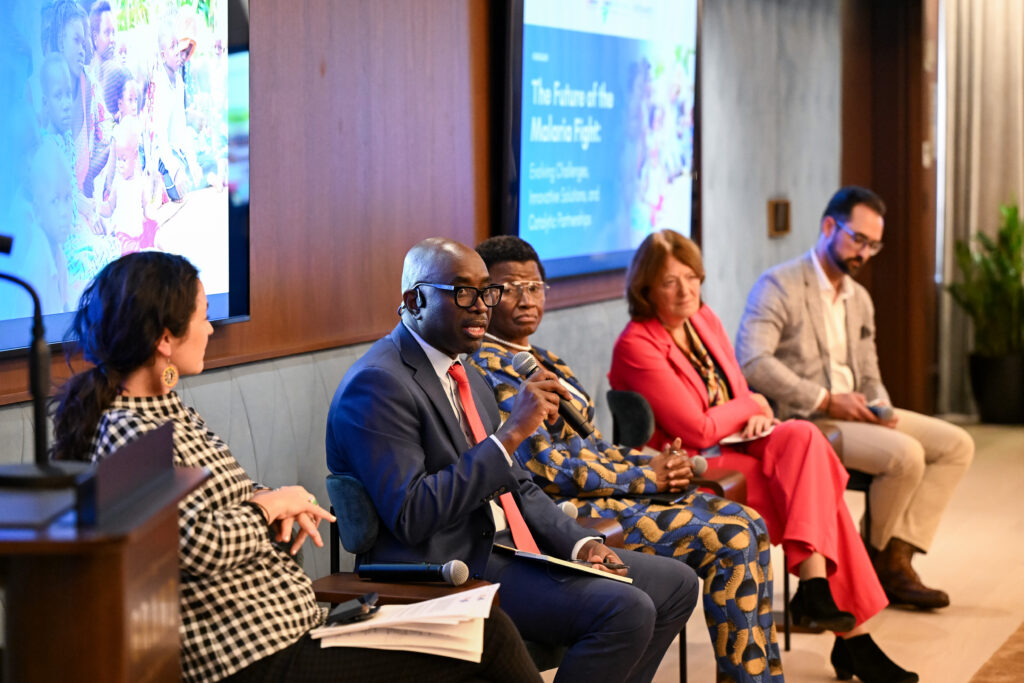
Despite resource constraints, rising drug and insecticide resistance, and reported increases in malaria cases this year, there are still reasons for hope: partners like Novartis received approval for the first malaria treatment for babies in the summer, Vestergaard continues to strengthen investments in manufacturing and testing bed nets on the African continent, and SC Johnson’s spatial repellents recently secured a WHO policy recommendation as a new prevention tool — one of the first in the last two decades.
“Building scientific capacity in Africa is the right thing to do,” said Amar Ali, CEO of Vestergaard. “We are deeply committed to our long-term ongoing investment in the Vestergaard-Noguchi Vector Lab and felt we needed to make the move on the manufacturing side too. With help from partners including the U.S. government we are now making this real, so that ultimately we can both test and manufacture our nets on the African continent.”
These innovations, along with long-proven solutions, will make it possible to stay one step ahead in the fight against malaria. But that can’t happen with business as usual. It will require renewed political will and improved collaboration to make every dollar count.
“We know what the problems are. We know what the solutions are,” said Dr. Michael Charles, CEO of RBM Partnership to End Malaria. “It’s now a sense of urgency in the fight against malaria. We’ve been asked to do more with less — at the global level, regional, and community. We have to work together.”
Thank you to our presenting sponsors: Novartis, RBM Partnership to End Malaria, Gates Foundation, and African Leaders Malaria Alliance. Thank you to SC Johnson, Valent Biosciences, and Vestergaard for providing additional support to this program.
© United to Beat Malaria. 2026 • Save Lives, Beat Malaria
A campaign of the